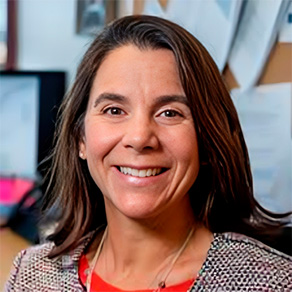

Karin Verspoor
[introductory/intermediate] AI Scientists and beyond: Roles for GenAI in Biomedical Research and Discovery
Summary
This course will explore the use of the scientific literature as the foundation for scientific discovery, examining how natural language processing (NLP) has played a role in supporting biomedical scientists to find, organise, and analyse data, evidence, and knowledge, and then examine the emerging use of genAI as an active collaborator in the scientific process. We aim to provide the participant with a comprehensive understanding of the role of text in science, the different ways that NLP can support science, including via LLMs, and how genAI technology affords new opportunities but also requires thoughtful adoption.
Syllabus
Session 1: Biomedical literature mining history and context
- Text mining and information extraction for organising biomedical knowledge
- Literature-based discovery
- Systematic review automation
Session 2: GenAI for scientific discovery
- Prediction and generation: AlphaFold, protein language models, and more
- Agentic AI and AI co-scientists
- Biological data integration
- Knowledge grounding & fact verification
References
Simmons, M., Singhal, A., Lu, Z. (2016). Text Mining for Precision Medicine: Bringing Structure to EHRs and Biomedical Literature to Understand Genes and Health. In: Shen, B., Tang, H., Jiang, X. (eds.). Translational Biomedical Informatics. Advances in Experimental Medicine and Biology, vol 939. Springer, Singapore. https://doi.org/10.1007/978-981-10-1503-8_7
Wang, H., Fu, T., Du, Y. et al. Scientific discovery in the age of artificial intelligence. Nature 620, 47–60 (2023). https://doi.org/10.1038/s41586-023-06221-2
Ghareeb, A.E., Chang, B., Mitchener, L. et al. A multi-agent system for automating scientific discovery. Nature 655, 497–505 (2026). https://doi.org/10.1038/s41586-026-10652-y
Gottweis, J., Weng, W.H., Daryin, A. et al. Accelerating scientific discovery with Co-Scientist. Nature 655, 487–496 (2026). https://doi.org/10.1038/s41586-026-10644-y
Pre-requisites
We will start from a high-level overview of the field, and then move into some methodological work. Some understanding of software architectures and machine learning would be helpful.
Short bio
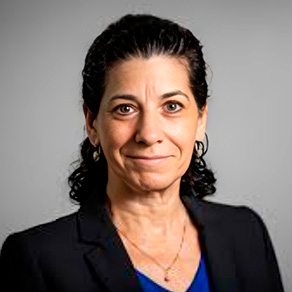
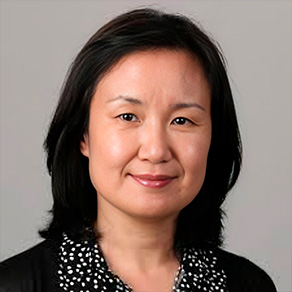
Distinguished Professor Karin Verspoor is Dean of the School of Computing Technologies at RMIT University in Melbourne, Australia. She is also a co-founder and the Victoria node lead of the Australian Alliance for Artificial Intelligence in Healthcare. Karin is passionate about using artificial intelligence to enable biological discovery and clinical decision support from data. Her work has a specific emphasis on the use of natural language processing to transform unstructured data in biomedicine into actionable information.