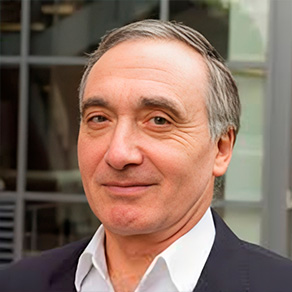
Pierre Baldi
[introductory/advanced] The AI-driven Healthcare of the Future
Summary
AI today can pass the Turing test and is in the process of transforming science, technology, society, humans, and beyond. Surprisingly modern AI is built out of two very simple and old ideas, rebranded as deep learning: neural networks and gradient descent learning. I will describe several applications of AI to problems in biomedicine developed in my laboratory, from the molecular level to the patient level using omic data, imaging data, clinical data, and beyond. Examples include the analysis of circadian rhythms in gene expression data, the identification of polyps in colonoscopies, and the prediction of post-operative outcomes. I will discuss the opportunities and challenges for developing, integrating, and deploying AI in the first AI-driven hospitals of the future and present two frameworks for addressing some of the most pressing societal issues related to AI research.
Syllabus
- Brief History of AI
- Modern AI and Deep Learning
- Healtcare Problems and Applications
- The AI-Driven Hospital of the Future
- AI Opportunities and Challenges in Healthcare and Beyond
References
Gregor Urban, Priyam Tripathi, Talal Alkayali, Mohit Mittal, Farid Jalali, William Karnes, and Pierre Baldi. Deep Learning Localizes and Identifies Polyps in Real Time with 96% Accuracy in Screening Colonoscopy. Gastroenterology, volume 155, issue 4, pages 1069–1078, (2018).
Pierre Baldi. Deep Learning in Science. Cambridge University Press (2021).
Parallels Between Natural and Artificial Intelligence Safety: https://ai-science.uci.edu/the-parallels-between-natural-and-artificial-intelligence-safety/
Pre-requisites
Basic calculus, algebra, and probability theory. Some familiarity with machine learning and neural networks is preferable.
Short bio
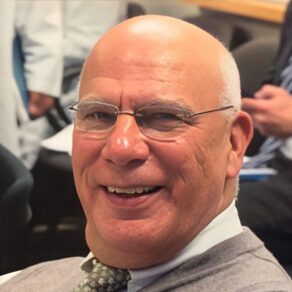
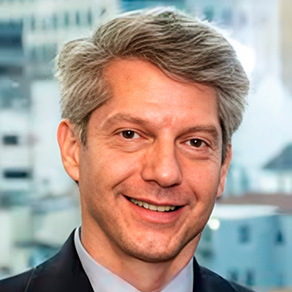
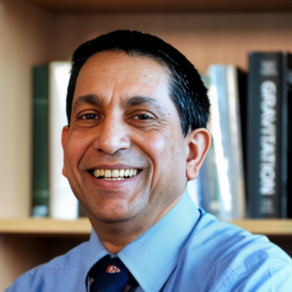
Pierre Baldi earned MS degrees in Mathematics and Psychology from the University of Paris, and a PhD in Mathematics from the California Institute of Technology. He is currently Distinguished Professor in the Department of Computer Science, Founding Director of the AI in Science Institute, and Associate Director of the Center for Machine Learning and Intelligent Systems at the University of California Irvine. The long term focus of his research is on understanding intelligence in brains and machines. He has made several contributions to the theory of AI and deep learning, and pioneered the application of AI to the natural sciences, to address problems in physics, chemistry, and biomedicine. Examples of application problems include the detection of exotic particles in physics, the prediction of protein structures and of chemical reactions in biochemistry, and the analysis of genomes and images in bio-medicine. He is currently also studying some of the societal challenges posed by AI, such as the tension between academic and corporate AI research and the quest for AI safety frameworks. He has published ~400 journal articles and 5 books, including: Deep Learning in Science, Cambridge University Press, 2021. His honors include the 1993 Lew Allen Award at JPL, the 2010 E. R. Caianiello Prize for research in machine learning, the 2023 Dennis Gabor Award of the International Neural Network Society, the 2027 IEEE Neural Network Pioneer Award, and election to Fellow of the AAAS, AAAI, IEEE, ACM, and ISCB. He serves as Associated Editor for Artificial Intelligence, Neural Networks, and the IEEE/ACM Transactions in Computational Biology and Bioinformatics. He has mentored ~80 graduate students and postdoctoral fellows and co-founded several startup companies.