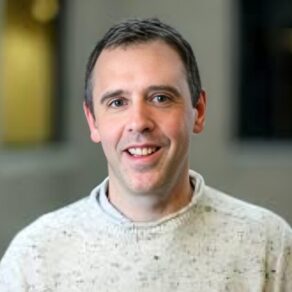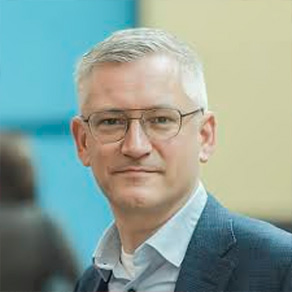

Charles Friedman
[introductory] Synergizing AI and Learning Health Systems to Transform Health
Summary
Artificial intelligence (AI) and Learning Health Systems (LHS) represent megatrends that, at present, are developing largely in parallel across health domains. As both continue to gather technical and societal momentum, their trajectories will become more difficult to change. Yet each can benefit enormously from the other. Failure to connect them will likely cause each of them to underperform, and the world’s population will be the loser. Failure to connect them will also be failure to take advantage of natural complementarities.
The two sessions will introduce the features of AI and LHS that provide the bases for a synergistic relationship. These features include the potential of AI to enhance the “data to knowledge” and “knowledge to practice” components of LHS improvement cycles, and the potential to manage and improve AI models through the continuous improvement activities that characterize routine LHS activity. Building on these potentials, the sessions will describe how the infrastructure which characterizes LHS can provide a “glide path” for AI to land “safely” in health and health care.
Syllabus
The first session will focus on features of LHS and AI which create the potential synergies between them. For example, a mature LHS will be described as a large number of co-occurring improvement cycles, each addressing a unique health problem but all receiving services from a shared socio-technical infrastructure. This infrastructure plays a fundamental role in creating the synergy with AI, and the LHS infrastructure will be introduced in depth. Correspondingly, the session will examine the multiple ways that the computational models at the heart of AI can help the improvement cycles achieve their goals more quickly and efficiently.
The second session will address in detail how a “glide path”, analogous to an instrument landing system for AI applied to health, might be developed, how it would function, and how it would be governed. Participants will be actively involved in co-designing aspect of the glide path.
References
V Curcin, B Delaney, A Alkhatib, N Cockburn, … CP Friedman. Learning Health Systems provide a glide path to safe landing for AI in health. Artificial Intelligence in Medicine, 173: 2025. https://doi.org/10.1016/j.artmed.2025.103346
Friedman CP, Lomotan EA, Richardson JE, Ridgeway JL. Socio-technical infrastructure for a learning health system. Learning Health Systems. 8: 2024. PMID: 38249851
Friedman CP, What is unique about learning health systems? Learning Health Systems. 2022. PMID: 35860320
Pre-requisites
None.
Short bio
Charles Friedman is Professor of Learning Health Sciences at the University of Michigan Medical School. From 2014 to 2024, he was Founding Chair of the Department of Learning Health Sciences and the Josiah Macy Jr. Professor of Medical Education. He holds joint appointments in the Schools of Information and Public Health. He is founding editor-in-chief of the open-access journal Learning Health Systems and co-chair of the multi-national movement to Mobilize Computable Biomedical Knowledge (MCBK).
Throughout his career, Friedman has developed and studied methods to improve health, education, and research through innovative applications of information technology. Most recently, Friedman has focused his academic interests and activities on the concept and methods of Learning Health Systems that improve health by marrying discovery to implementation, and the socio-technical infrastructure required to sustain these systems.
Friedman is a Distinguished Fellow of the American College of Medical Informatics, and a founding fellow of the International Academy of Health Sciences Informatics. He holds an honorary doctorate from the University of Lucerne in Switzerland for his contributions to the science of Learning Health Systems. Prior to coming to Michigan (2007-2011), Friedman held executive positions at the Office of the National Coordinator for Health IT (ONC) in the U.S. Department of Health and Human Services. Immediately prior to his work in the government, he was Associate Vice Chancellor for Biomedical Informatics, and Founding Director of the Center for Biomedical Informatics at the University of Pittsburgh.